Field guide / People and place
Portraits Beyond the Patio
A garden is more than a soft green backdrop. Let paths, pots, chairs, and ordinary gestures tell us something about the person standing among them.
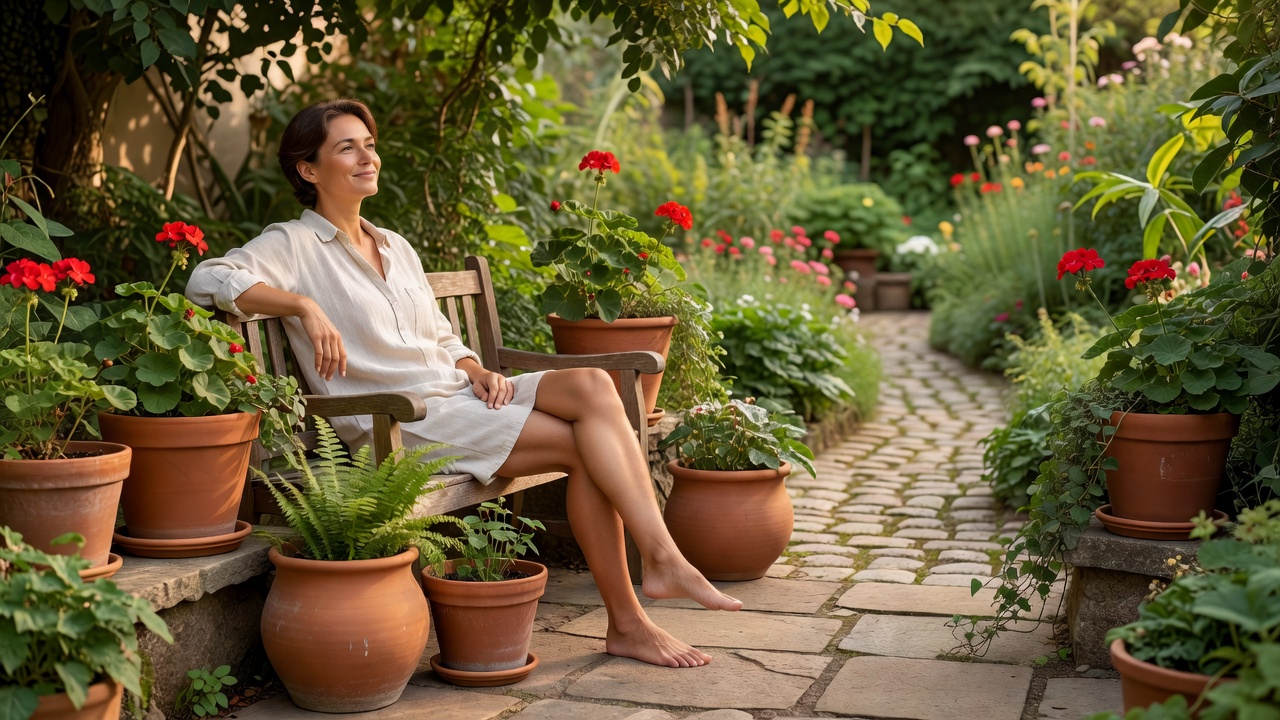
Choose the background before the pose
Begin with an empty frame. Look for a useful stretch of hedge, a wall with quiet texture, or a path that leads into the garden. Then decide where the person can stand without a fence post appearing to grow from their head. Moving the camera a short distance sideways often changes these overlaps more effectively than asking the subject to move.
Keep the brightest background patch away from the face unless it serves a clear purpose. A pale chair, hanging laundry, or a reflective window can compete even when blurred. Simplifying does not mean removing every sign of daily life. Keep objects that explain the scene and move objects that only interrupt it.
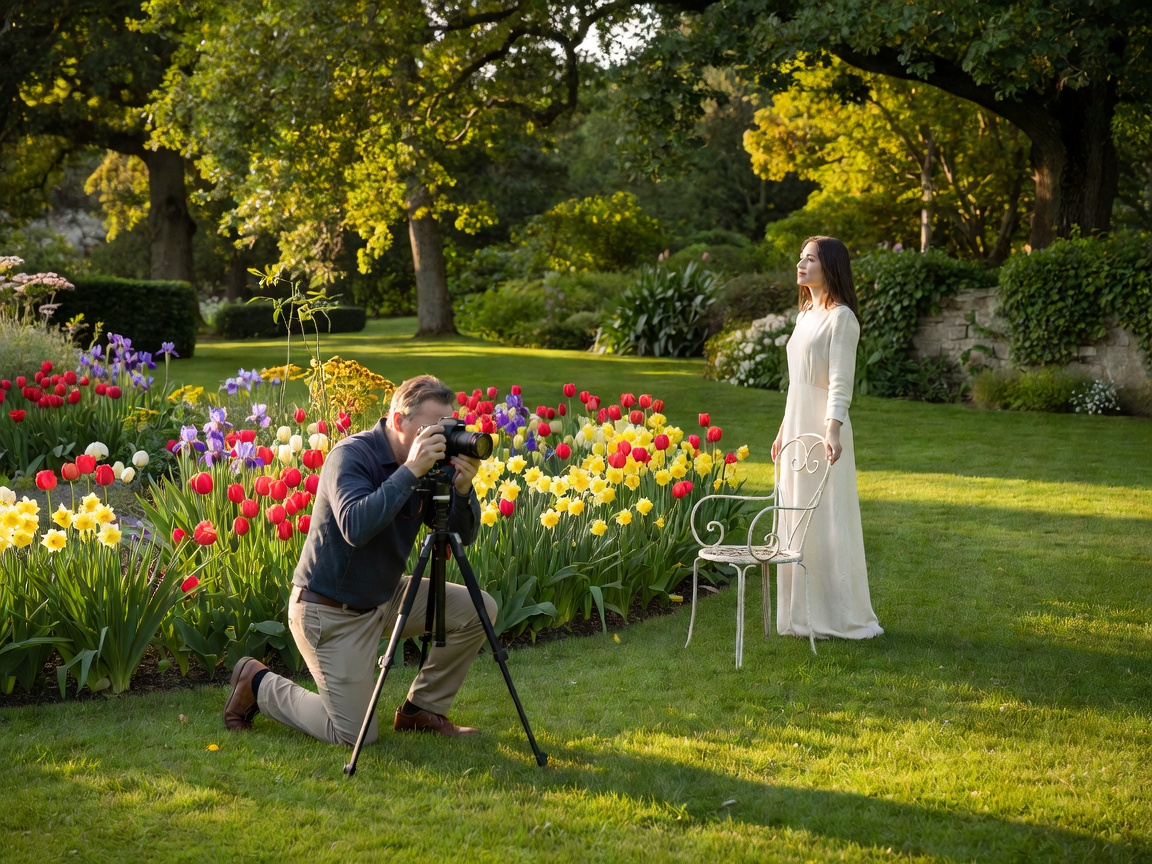
Style a patio with a light hand
Choose a small set of objects that belong together: a chair, a pot, and perhaps a watering can. Give each one space to read as a separate shape. Tangled hoses, brightly printed packaging, and isolated scraps of plastic often attract attention because their color or texture breaks the pattern. Put them aside temporarily rather than planning a complicated retouch.
Watch the edges of furniture. A table cutting across the body at an awkward height may feel more intrusive than the same table photographed from slightly higher up. Turn a chair a little toward the light instead of placing it square to the camera. Check stability before anyone sits, and keep paths clear of trip hazards.
Build depth in three layers
Think in terms of a near layer, the person, and a farther layer. A few soft leaves at one edge can introduce depth, while a visible path or distant planting bed explains space behind the subject. You do not need all three layers in every photograph, but the exercise prevents the portrait from becoming a face pasted onto an indistinct background.
Keep foreground plants away from important facial features. A blurred stem across an eye is still a distraction. Leave more distance between the person and the background when possible; this can create separation without requiring an extremely wide aperture. Make one environmental frame and one closer frame before changing the arrangement.
Give a person something comfortable to do, then leave room for an unplanned expression.
Three small compositional changes
Position
Step sideways
Separate the head from a fence post or bright leaf cluster. Watch the frame edges as carefully as the center.
Height
Lower with purpose
A lower view can include flowers against the subject, but may also reveal a distracting sky. Compare both outcomes.
Distance
Back up, then frame
Give faces a comfortable perspective. Adjust focal length after choosing a sensible camera-to-subject distance.
Use camera height as a decision
Eye-level is a useful starting point because it creates a direct relationship with the person. A slightly higher viewpoint can reveal the arrangement of a patio or the shape of a planting bed. A lower viewpoint can make foliage feel taller and more immersive. None is automatically flattering or correct; each tells a different spatial story.
With a phone's wide main camera, avoid putting a face very close to the lens or near the frame edge. Step back and crop modestly if needed. Perspective depends primarily on where the camera is, not on a flattering label attached to a lens. Check hands and knees too: whatever is nearest can appear disproportionately large.
Direct an action, not an expression
Instead of asking for a natural smile, suggest an ordinary task: turn a pot, brush soil from a glove, look toward the end of the path, or settle into a chair. Explain where the useful light is and why you are asking for a small turn. Collaboration usually feels easier than a sequence of unexplained commands.
Photograph the pause after the action as well as the action itself. Keep your shutter speed high enough for movement, focus carefully on the nearer eye when appropriate, and take short sequences rather than holding the shutter indefinitely. Invite the person to see a few frames so you can agree on what feels comfortable and recognizable.
Finish with permission and a short sequence
Ask before photographing someone, explain how you intend to use the images, and get specific permission before public sharing. A private family picture and a promotional website image are different uses. Be particularly careful with children: involve a parent or guardian, respect the child's comfort, and avoid revealing identifying details or a home's location unnecessarily.
Make a simple sequence: a wider scene, a medium portrait, and a close detail such as hands beside a plant. This gives you variety without exhausting the person or rearranging the entire yard. Stop when attention or comfort drops. Then use the outdoor editing workflow to keep the person and the garden looking as though they share the same light.